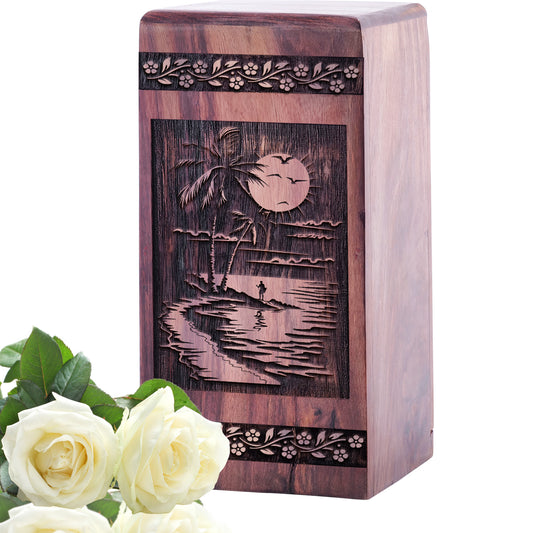
Why Do You Need an Urn?

A Complete Guide to Purpose, Meaning, and Everything You Should Know About Urns for Ashes.
Introduction
When someone we love passes away, we are left with memories, emotions, and an important decision—how to respectfully preserve their remains. For families choosing cremation, one essential element becomes part of that journey: the urn.
But many people still ask:
“Is an urn really necessary?”
“Why do you need an urn in the first place?”
An urn is far more than just a container. It represents love, remembrance, respect, and a physical connection to someone who meant everything to us. It also plays a practical role in preserving ashes safely for years—sometimes generations.
In this comprehensive guide, we’ll explore:
- The purpose and importance of an urn
- Scientific truths about cremation
- Religious beliefs and myths
- Emotional and practical reasons for choosing an urn
- Answers to all your frequently asked questions
What Is an Urn and Why Is It Important?
An urn is a specially designed container used to hold cremated remains (ashes). These ashes are not typical ash like from fire—they are actually processed bone fragments.
Why an Urn Matters
An urn serves several important roles:
1. Protection and Preservation
Ashes need to be stored securely. Without an urn:
Ashes can scatter unintentionally
Moisture or environmental exposure may damage them
There is a risk of loss
An urn ensures long-term preservation.
2. Respect and Dignity
Keeping ashes in an urn shows honor and respect for the deceased. It reflects care, just as burial does.
3. Emotional Connection
Grief often comes with a desire to stay connected. An urn provides:
- A sense of closeness
- A physical place to remember
- Comfort during mourning
Is an Urn Necessary?
Technically, you can receive ashes in a temporary container from a crematorium. However, this is usually:
- Not durable
- Not secure
- Not designed for long-term storage
So while an urn may not be legally required, it is emotionally, practically, and respectfully essential.
The Emotional Significance of an Urn
Beyond function, urns carry deep emotional meaning.
A Symbol of Love
An urn becomes a representation of:
- Memories
- Relationships
- Shared moments
A Tool for Healing
Grief doesn’t disappear overnight. Having an urn nearby can help:
- Process emotions
- Create a memorial space
- Provide daily comfort
A Personal Tribute
Modern urns can be:
- Customized with names or messages
- Designed around hobbies or passions
- Crafted as artistic memorial pieces
What Happens During Cremation?
Understanding cremation helps explain why urns are necessary.
The Process
- The body is exposed to temperatures of 1400–1800°F (760–980°C)
- Soft tissues are completely vaporized
- Bones remain and are processed into fine particles
These particles are what we call ashes, and they are placed into an urn.
What Stays Behind After Cremation?
After cremation, what remains are:
- Bone fragments (processed into ash-like powder)
- Mineral content (mainly calcium compounds)
Why Are My Husband’s Ashes So Heavy?
Ashes may feel heavier than expected because:
- They are made of dense bone minerals
- An adult’s ashes typically weigh 2–3 kg (4–7 pounds)
Is There Any DNA Left in Cremated Ashes?
No.
The high temperatures destroy all DNA. This means:
- Ashes cannot be used for genetic identification
- They are purely mineral remains
Are Any Bones Left After Cremation?
Yes—but not in their original form.
- Bones become fragile due to heat
- They are crushed into a fine consistency
- The final result looks like ash but is actually processed bone
Why Do Bones Not Burn in Cremation?
Bones don’t burn like soft tissue because they are made of:
- Calcium phosphate
- Other minerals resistant to heat
Instead of burning, they:
- Calcify
- Break into fragments
What Happens to Teeth During Cremation?
Teeth are similar to bones:
- They may survive in fragments
- Dental fillings or implants remain
These are usually:
- Removed during processing
- Separated from ashes
What Body Parts Don’t Burn in Cremation?
Technically, all organic material is destroyed, but:
- Bones do not fully burn
- Metal implants remain intact
What Body Parts Are Removed Before Cremation?
Before cremation:
- Pacemakers are removed (for safety reasons)
- Certain medical devices may also be taken out
Do They Drain the Blood From a Body Before Cremation?
No.
Draining blood is part of embalming, not cremation. For cremation:
- The body is not necessarily embalmed
- Blood remains inside and is vaporized during the process
Do They Take Clothes Off a Body Before Cremation?
Not always.
In most cases:
- The body is cremated with clothing or a funeral garment
- Families may choose specific attire
Can You Be Cremated With Your Wedding Ring On?
Yes, if the family chooses.
- Jewelry can remain with the body
- However, it may be damaged or melt during cremation
Do Bodies Sometimes Sit Up During Cremation?
This is a myth.
- Heat may cause muscles to contract
- This can create slight movement
- There is no consciousness or awareness
Can a Body Feel Pain During Cremation?
No.
Cremation only occurs after death has been officially confirmed. There is:
- No brain activity
- No sensation of pain
What Happens 30 Minutes After Death?
Within 30 minutes:
- The body begins to cool (algor mortis)
- Muscles may stiffen gradually
- No awareness or consciousness remains
Why Is the Skull Broken During Cremation?
The skull is not manually broken.
- It fractures naturally due to heat
- Remaining fragments are processed afterward
Has Anyone Ever Woken Up Before Being Cremated?
No.
Modern cremation involves:
- Legal verification of death
- Strict protocols
- Multiple checks
Religious Views on Cremation
What Does God Say About Cremation?
Religious views vary widely.
Christianity
- Now widely accepts cremation
- Emphasizes respect for remains
Hinduism
- Cremation is traditional
- Ashes are often scattered in sacred rivers
Buddhism
- Accepts cremation
Islam
- Prohibits cremation
- Requires burial
Judaism
-
Traditionally discourages cremation
Why Is Cremation Considered Sinful by Some?
Some beliefs consider cremation sinful because:
- The body is sacred
- Burial is seen as a path to resurrection
However, modern interpretations are often more accepting.
Can You Still Go to Heaven If You Are Cremated?
Yes.
Most religious teachings today agree:
- The soul is separate from the body
- Cremation does not affect the afterlife
What Religions Prohibit Cremation?
- Islam
- Orthodox Judaism
- Some traditional Christian sects
Is It Okay to Put an Urn at Home?
Yes, it is completely acceptable.
Benefits:
- Emotional comfort
- Daily remembrance
- Personal memorial space
Can You Leave an Urn on Overnight?
Yes. There are no restrictions.
Where Should an Urn Be Placed at Home?
Ideal places include:
- A quiet shelf or altar
- Living room memorial space
- Bedroom (private remembrance)
Tips:
- Keep it safe and stable
- Avoid high-traffic areas
- Choose a respectful location
Where Is the Best Place to Put an Urn?
It depends on personal preference:
- At home
- In a columbarium niche
- Buried in a cemetery
- In a meaningful outdoor space
How Long Do Human Ashes Last in an Urn?
Forever.
Ashes do not decompose. If stored properly:
- They can last indefinitely
- They remain unchanged over time
Is It Okay to Touch an Urn?
Yes.
There is nothing harmful about touching an urn. Many people:
- Hold or clean the urn
- Feel comfort through physical contact
Who Legally Owns the Ashes of a Deceased Person?
Typically:
-
The next of kin owns the ashes
This may include:
- Spouse
- Children
- Parents
Legal rules vary by location.
Why an Urn Is More Than Just a Container
An urn is:
A Memory Keeper
It holds not just ashes—but memories.
A Symbol of Respect
It ensures dignity for the departed.
A Source of Comfort
It helps loved ones cope with loss.
Types of Urns You Can Choose
1. Wooden Urns
Warm, natural, and timeless
2. Metal Urns
Durable and elegant
3. Ceramic Urns
Artistic and decorative
4. Biodegradable Urns
Eco-friendly for natural burials
5. Keepsake Urns
Small urns for sharing ashes
Conclusion
So, why do you need an urn?
Because it fulfills both practical and emotional needs:
- It safely preserves ashes
- It honors the memory of a loved one
- It provides comfort during grief
- It creates a lasting connection
In the end, an urn is not just about holding remains—it’s about holding on to love, memories, and meaning.
FAQs (Quick Answers)
What body parts don't burn during cremation?
Most soft tissues are completely consumed during cremation. However, bone fragments remain and are later processed into a fine ash-like consistency. Metal implants, such as hip replacements, may also survive the process and are removed afterward before the ashes are placed in an urn for ashes.
Is there any DNA left in cremated ashes?
No. The intense heat used during cremation destroys DNA completely. The cremated remains consist mainly of mineralized bone fragments, which can be respectfully preserved in urns for human ashes or other memorial containers.
What does God say about keeping ashes?
There is no universal religious rule regarding keeping ashes. Many Christian denominations allow families to keep cremated remains in commemorative cremation urns at home, while other faiths may encourage burial or scattering. Families should follow their religious beliefs and personal preferences.
What happens to teeth during cremation?
Teeth are highly resistant to heat and may survive in fragments during cremation. These fragments are processed along with the remaining bone material before the ashes are placed into cremation urns.
Why is the skull broken during cremation?
The skull is not intentionally broken by crematory staff. Due to extreme temperatures, it naturally becomes fragile and fractures. The remaining fragments are then processed into the final cremated remains.
Why shouldn't ashes be kept at home?
There is generally no legal or health-related reason preventing families from keeping ashes at home. Many people find comfort in displaying an urn for ashes in a memorial space. The decision depends on personal, cultural, or religious beliefs.
Can bodies sit up during cremation?
No. This is a common myth. While heat can cause muscle contractions that may create slight movements, a deceased person cannot sit up or become conscious during cremation.
Can you identify a person by their ashes?
In most cases, no. Since DNA is destroyed during cremation, identification from ashes alone is extremely difficult. Crematories rely on strict tracking procedures throughout the cremation process to ensure proper identification.
How long can you get DNA from a dead person?
DNA can remain recoverable from certain tissues, bones, teeth, or preserved samples for many years after death. However, once cremation occurs, usable DNA is typically destroyed by the high temperatures.
Why is 3 AM God's hour?
The idea that 3 AM is "God's hour" comes from certain religious traditions and folklore. It is not based on official doctrine and has no connection to cremation, memorialization, or the use of cremation urns USA families commonly choose for remembrance.
Why is it a sin to scatter ashes?
Some religious traditions discourage scattering ashes because they believe the body should remain intact or be buried in a sacred location. Other faiths fully permit scattering. Families should consult their spiritual leaders if they have concerns.
Will husband and wife know each other in heaven?
Different religions offer varying interpretations of relationships in the afterlife. Many faith traditions teach that love and spiritual connections continue beyond earthly life, though beliefs differ regarding the exact nature of those relationships.
What happens to the brain during cremation?
The brain, like other soft tissues, is completely consumed by the high temperatures of cremation. Only mineralized bone remains survive the process.
Can dogs smell their owners' cremated ashes?
Dogs have an extraordinary sense of smell and may recognize scents associated with cremated remains or the container holding them. However, because cremation alters organic material significantly, recognition varies from dog to dog.
What body parts are removed before cremation?
Certain medical devices, particularly pacemakers and some battery-powered implants, are removed before cremation for safety reasons. Most other body parts remain intact throughout the cremation process.
What happens in the first 30 minutes after death?
During the first 30 minutes after death, bodily functions cease, body temperature gradually begins to decrease, and the early stages of postmortem changes start. There is no awareness, sensation, or pain.
Do you carry your baby daddy's DNA for 7 years?
No scientific evidence supports the claim that a woman carries a partner's DNA for seven years. While tiny amounts of genetic material can sometimes remain temporarily in the body, the popular "7-year DNA" claim is a myth.
What not to do immediately after someone dies?
After a loved one passes away, avoid making rushed decisions. Contact medical professionals, notify close family members, and follow local legal requirements. Take time to consider memorial options, including selecting suitable urns for human ashes, an aluminium urn for human ashes, an urn vault, or other memorial products that honor your loved one's memory.